Geometric Tattoos in Toronto: How to Choose the Right Placement for Your Design
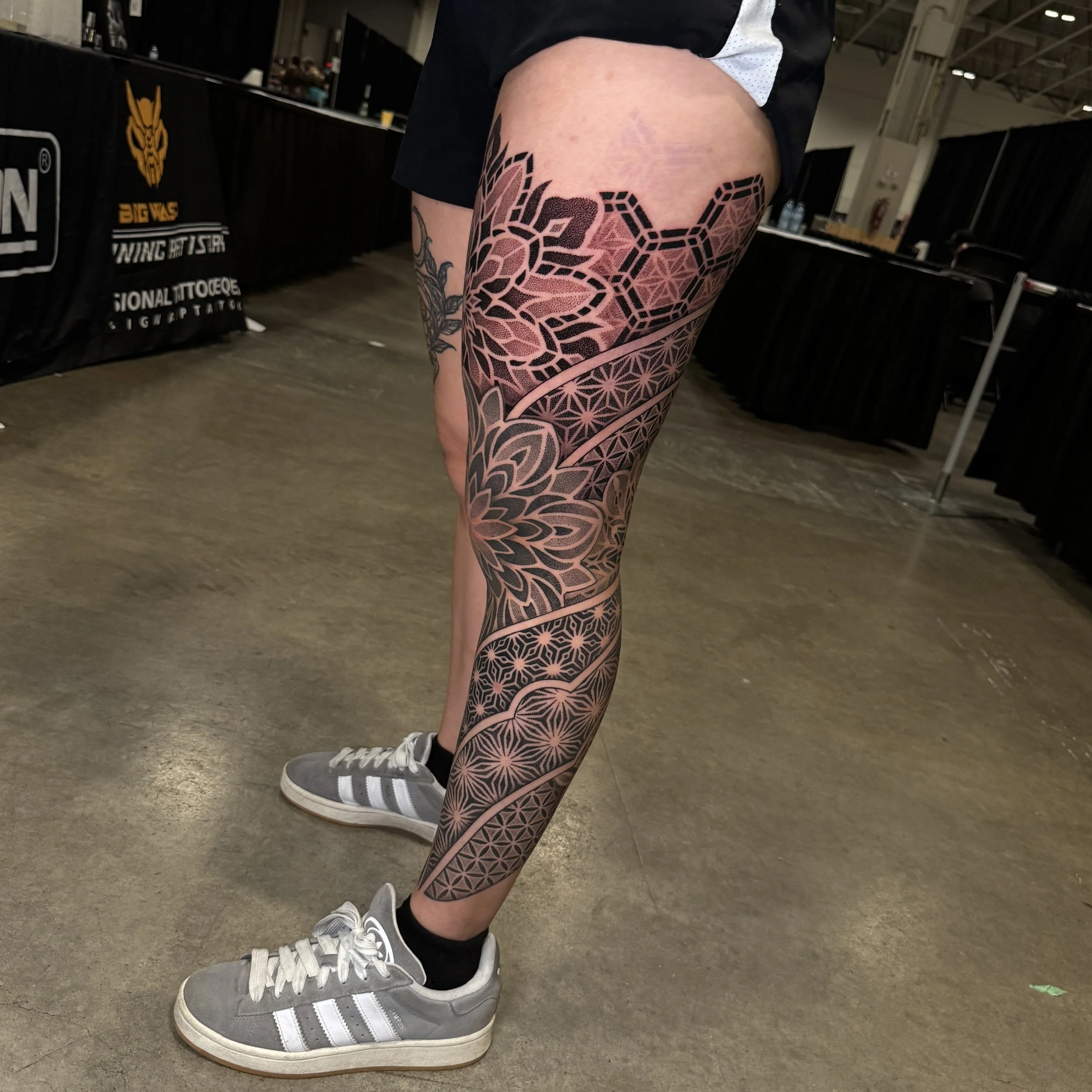
Geometric leg sleeve / 14 Sessions in total
Choosing the right placement is one of the most important steps when planning a geometric tattoo. A strong design should not simply be placed on top of the body. It should work with the anatomy, follow the natural direction of the muscles, and remain visually balanced from different angles.
For clients searching for geometric tattoos in Toronto, placement should be considered alongside the artist’s style, the scale of the project, and the amount of detail included in the composition. The same mandala, pattern, or ornamental structure can produce a completely different result depending on where and how it is applied.
Why Placement Is So Important in Geometric Tattooing
Geometric tattooing relies heavily on structure, symmetry, rhythm, repetition, contrast, and negative space. When these elements are adapted correctly to the body, the tattoo can enhance the natural shape of the anatomy.
However, a design created without considering the body may look balanced on a screen or sheet of paper but feel distorted once it is wrapped around an arm, leg, shoulder, or torso.
The body is not a flat surface. It moves, bends, expands, and changes depending on the position of the person. This means that geometric compositions need to be designed or adapted with movement in mind.
A successful placement allows the tattoo to remain readable while also creating a sense of flow around the body.
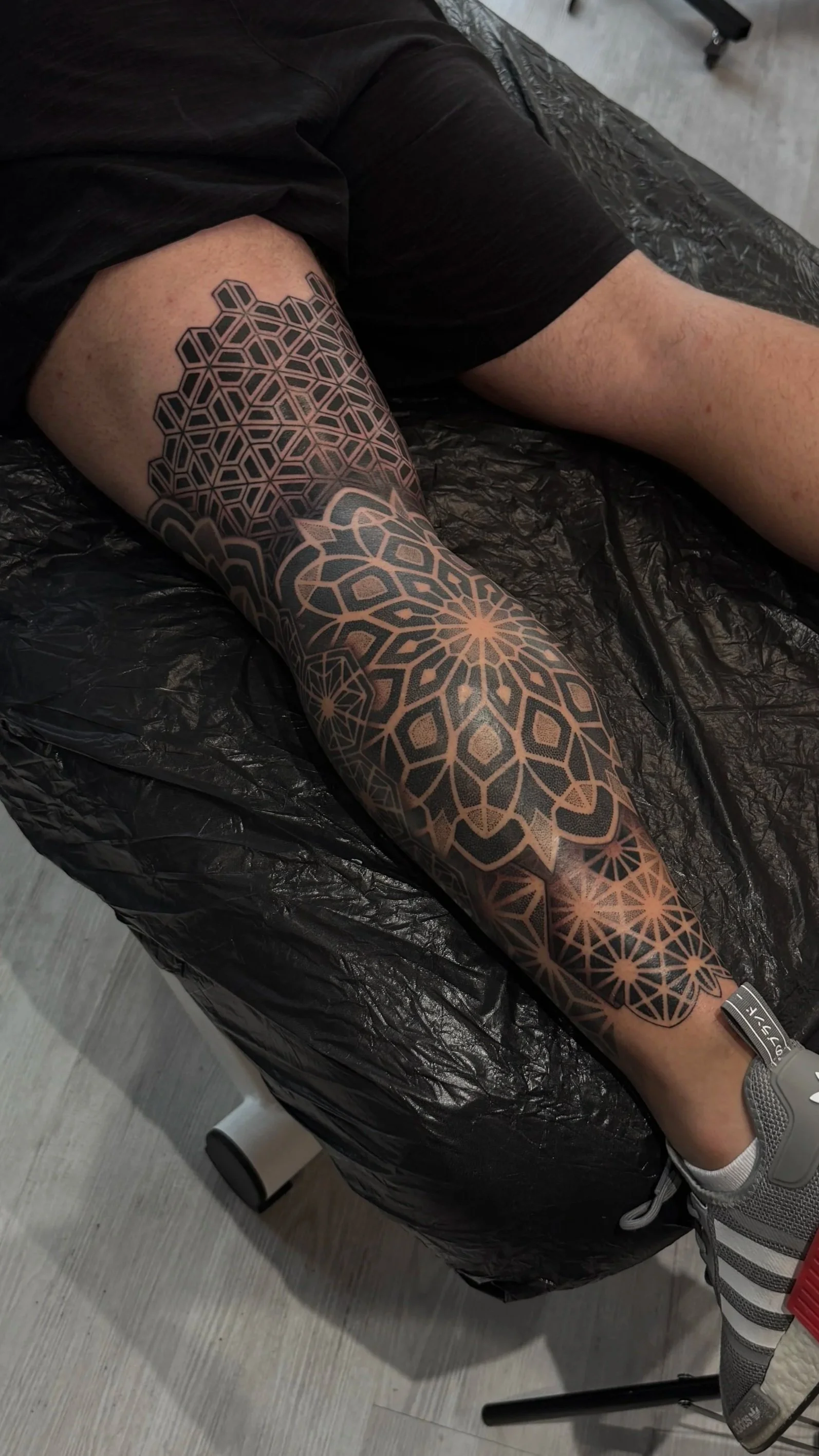
Geometric leg sleeve in progress
Consider the Shape of the Body Area
Every part of the body offers a different structure for geometric tattoo composition.
Flatter areas, such as the centre of the back or parts of the chest, can support symmetrical designs and larger mandalas. Cylindrical areas, such as the arms and legs, usually require designs that wrap naturally around.
The shoulders, elbows, knees, and other joints can also become important focal points. Circular elements such as mandalas may work effectively around these areas when the scale and structure are properly considered.
Instead of selecting a design first and forcing it into a placement, it is often better to evaluate the body area and then choose or adapt a design that works naturally within that space.
Geometric Arm and Sleeve Tattoos
The arm is one of the most versatile placements for geometric tattooing.
Forearms can work well for vertical compositions, ornamental structures, pattern-based designs, and smaller mandala projects. The outer forearm provides a relatively visible surface, while the inner forearm can create a more personal and contained presentation.
For larger projects, a geometric sleeve allows different elements to connect across the shoulder, upper arm, elbow, forearm, and wrist.
A successful sleeve should feel like one complete composition rather than several unrelated designs placed next to each other. Repeated patterns, transitions, negative space, and changes in visual density can help connect the entire arm.
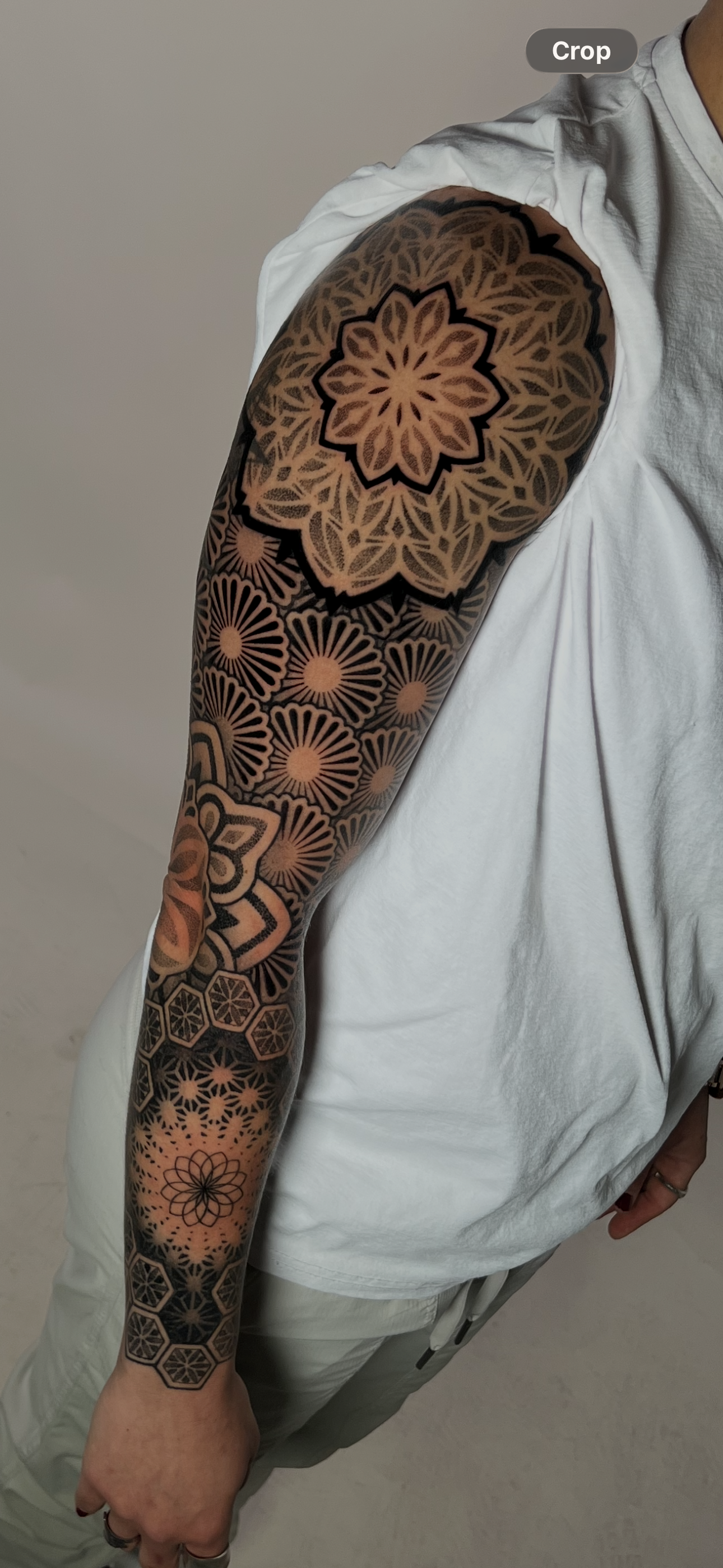
Geometric arm sleeve - 8 Full day sessions
Geometric Leg-Sleeve Tattoos
The leg offers more surface area than the arm and can support larger, more detailed compositions.
The thigh is suitable for substantial mandalas, ornamental panels, abstract geometry, and designs that require more width. The calf works well for vertical compositions and patterns that follow the natural length of the lower leg.
A full geometric leg sleeve can connect the thigh, knee, calf, and ankle through a continuous visual system.
The knee can become a central feature within the composition. Because it is a rounded and highly mobile joint, the surrounding geometry needs to be planned carefully. Circular structures, radial patterns, and controlled transitions can help integrate this area into the larger project.
Large-scale leg tattoos also provide an opportunity to alternate detailed areas with open skin, helping the complete composition remain readable from a distance.
Back Tattoos and Large Symmetrical Compositions
The back is one of the strongest placements for large-scale geometric tattoo projects.
Its broad surface can support central symmetry, complex mandalas, architectural structures, ornamental panels, and compositions that extend across the shoulders or down the spine.
A back tattoo can be experienced both as one complete image and as a collection of smaller details. Because of its size, it offers more freedom to create changes in pattern, scale, contrast, and visual rhythm.
The spine can act as a central axis, while the shoulder blades and lower back can guide the expansion of the design.
For this type of project, planning the entire composition from the beginning is usually more effective than building the back through unrelated individual tattoos.
Chest and Sternum Geometric Tattoos
The chest offers a naturally symmetrical structure, making it a strong placement for geometric and ornamental work.
A centred sternum design can follow the vertical line of the body, while a wider chest composition can expand toward the shoulders and upper torso.
Mandalas and radial elements may be positioned around the centre of the chest, but their scale needs to respect the shape of the ribs, pectoral muscles, and surrounding anatomy.
Chest tattoos can also connect naturally with the neck, shoulders, abdomen, or sleeves. For clients considering a larger body project, this area can serve as an important transition between multiple placements.
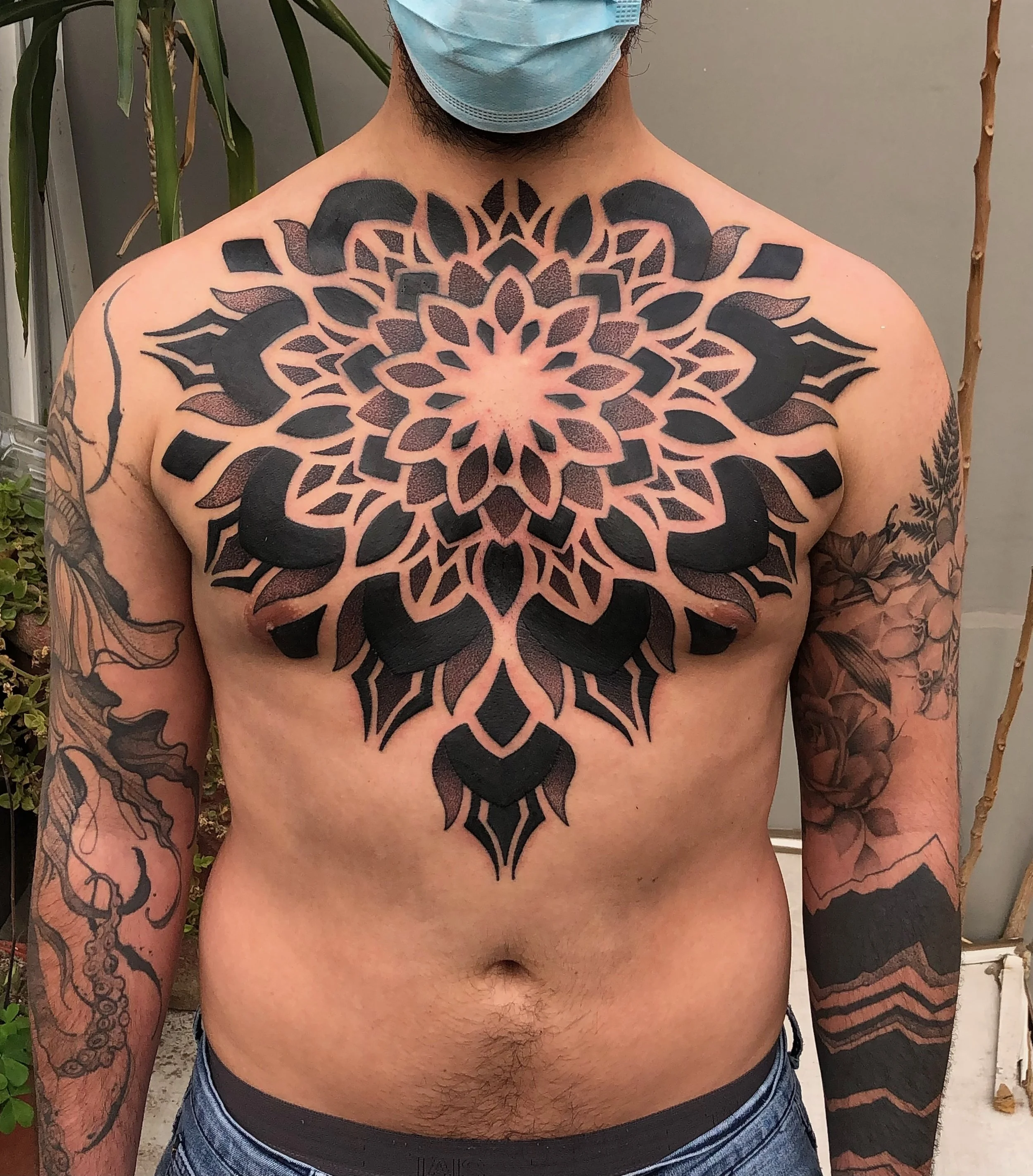
Geometric chest / 4 Full day sessions
Geometric Tattoos Around the Elbow and Knee
Elbows and knees are visually interesting placements because of their circular shape and movement.
Mandalas, radial patterns, flowers built through geometry, and concentric structures can be adapted around these joints. However, these designs should not be treated like flat circles placed directly over the skin.
The artist needs to consider how the joint bends, how the skin stretches, and how the surrounding elements connect with the rest of the limb.
These placements can be used as central focal points within a sleeve or leg project rather than isolated decorations.
Small Geometric Tattoos vs Large-Scale Projects
Not every geometric tattoo needs to become a full sleeve or back piece. Smaller projects can work effectively when the amount of detail matches the available space.
A small geometric tattoo should usually rely on clear shapes, controlled spacing, and a composition that remains readable at its intended size.
Trying to compress an extremely detailed mandala or pattern into a small area can weaken the visual result. Lines placed too closely together may lose separation as the tattoo settles and ages.
Large-scale projects provide more room for detailed patterns, visual transitions, negative space, and anatomical flow. They also allow the artist to develop a stronger relationship between the tattoo and the body.
The right scale depends on the design, placement, level of detail, and the visual effect the client wants to achieve.
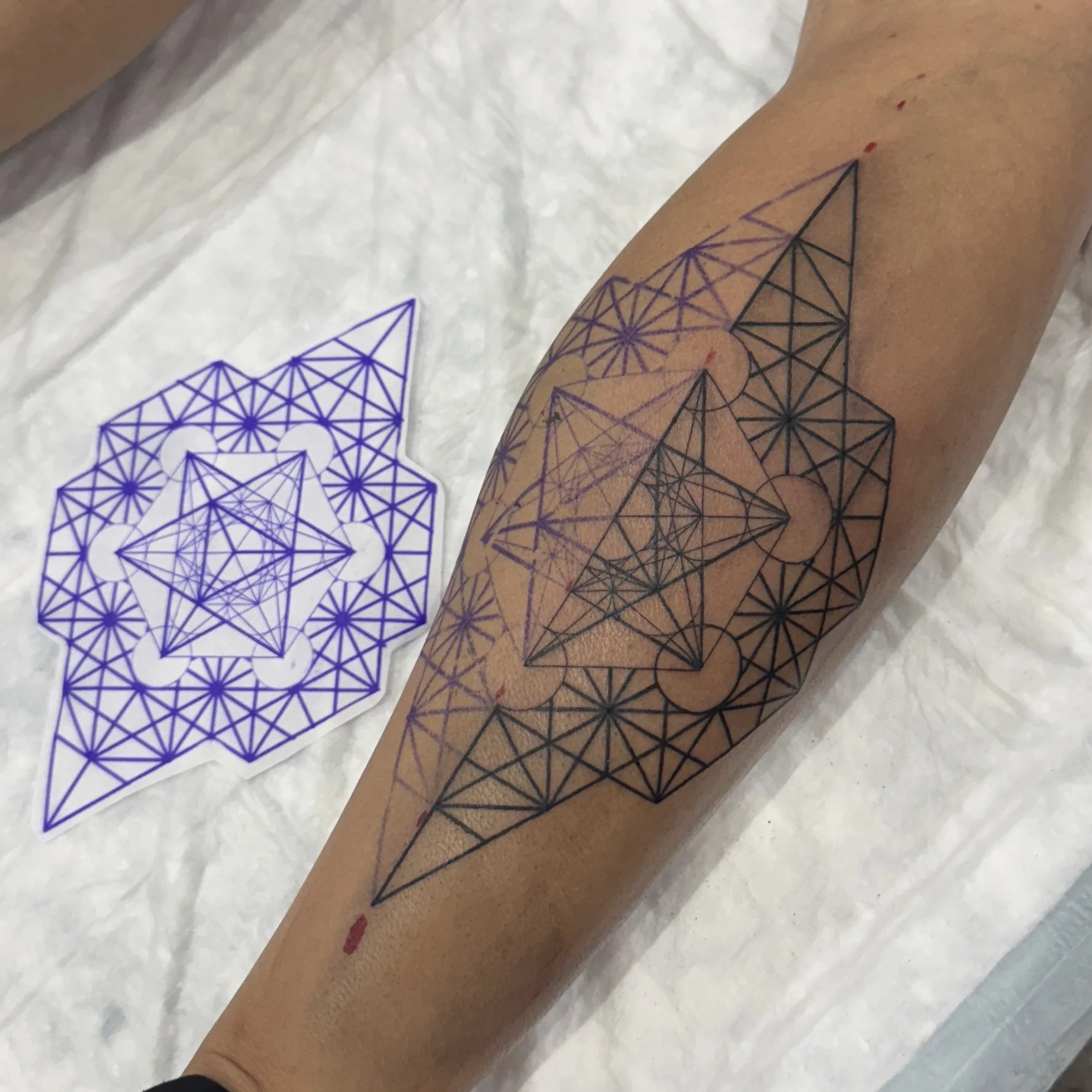
Geometric calf tattoo / 1 Full day session
Available Designs and Placement
Choosing an available geometric tattoo design does not mean that the design must be applied exactly as it appears in its original presentation.
An available design can often be resized, repositioned, or slightly adapted to work more naturally with the selected body area. The essential visual identity of the piece remains the same, while its proportions and flow are adjusted to the client’s anatomy.
When reviewing available designs, consider more than the image itself. Think about where the central elements could sit, how the design might wrap around the body, and whether the overall direction complements the placement you have in mind.
Available designs created directly in an artist’s signature style can be an excellent starting point because they already represent the type of geometry, pattern work, and composition the artist specializes in.
Custom Geometric Tattoos and Body Adaptation
A custom geometric tattoo may be more appropriate when the client has a specific placement, concept, or larger body project in mind.
In a custom composition, the structure can be developed around the anatomy from the beginning. The artist can decide where the main focal points should sit, how the design should move across the body, and which areas require more or less detail.
The references and ideas provided by the client can guide the direction, but the final design should still reflect the artist’s visual language and technical approach.
The strongest custom projects are usually created through collaboration. The client provides the concept, preferences, and placement, while the artist translates those elements into a composition that works effectively as a tattoo.
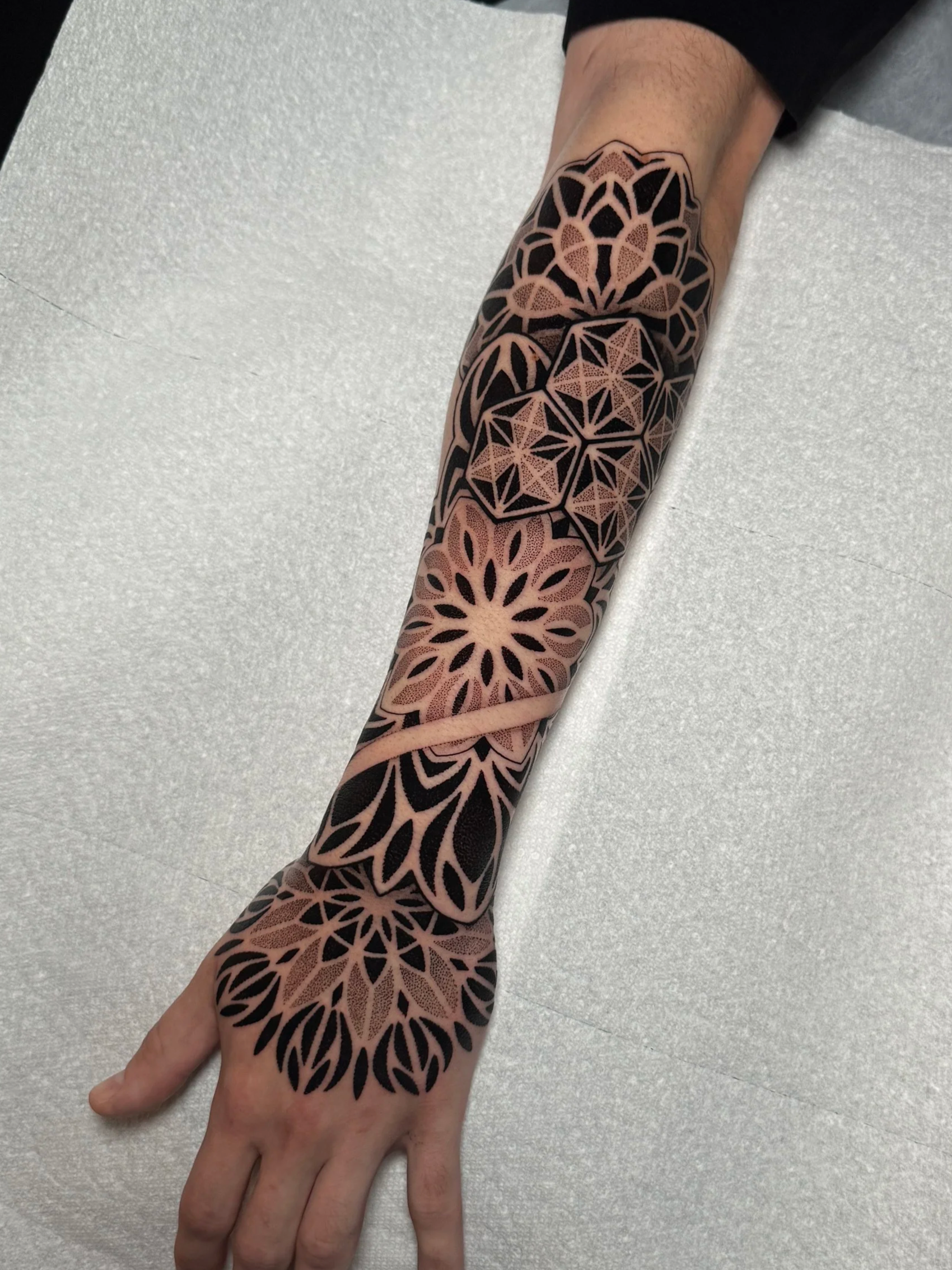
Geometric Forearm / 2 Full day sessions
Should You Choose the Placement or the Design First?
There is no single answer that works for every project.
You may already know that you want a geometric sleeve, chest piece, back tattoo, or leg project. In that situation, the design should be developed or selected around the chosen area.
In other cases, you may discover an available design that immediately connects with you. The next step is then to determine which placement allows that design to reach its full potential.
The important point is that placement and design should be evaluated together. Neither decision should be made without considering the other.
Planning a Geometric Tattoo in Toronto
When planning a geometric tattoo in Toronto, take time to review the artist’s portfolio, healed work, available designs, and experience with the body area you are considering.
Look for examples that demonstrate more than precision in a close-up photograph. Pay attention to how complete tattoos sit on the body, how they move around limbs, and how the design remains balanced from different perspectives.
It is also useful to remain open to recommendations regarding scale and placement. A design may need to become larger, move slightly, or change proportions to create a stronger final result.
The purpose of this guidance is not to replace your original idea. It is to help transform that idea into a tattoo that looks intentional, balanced, and connected to your anatomy.
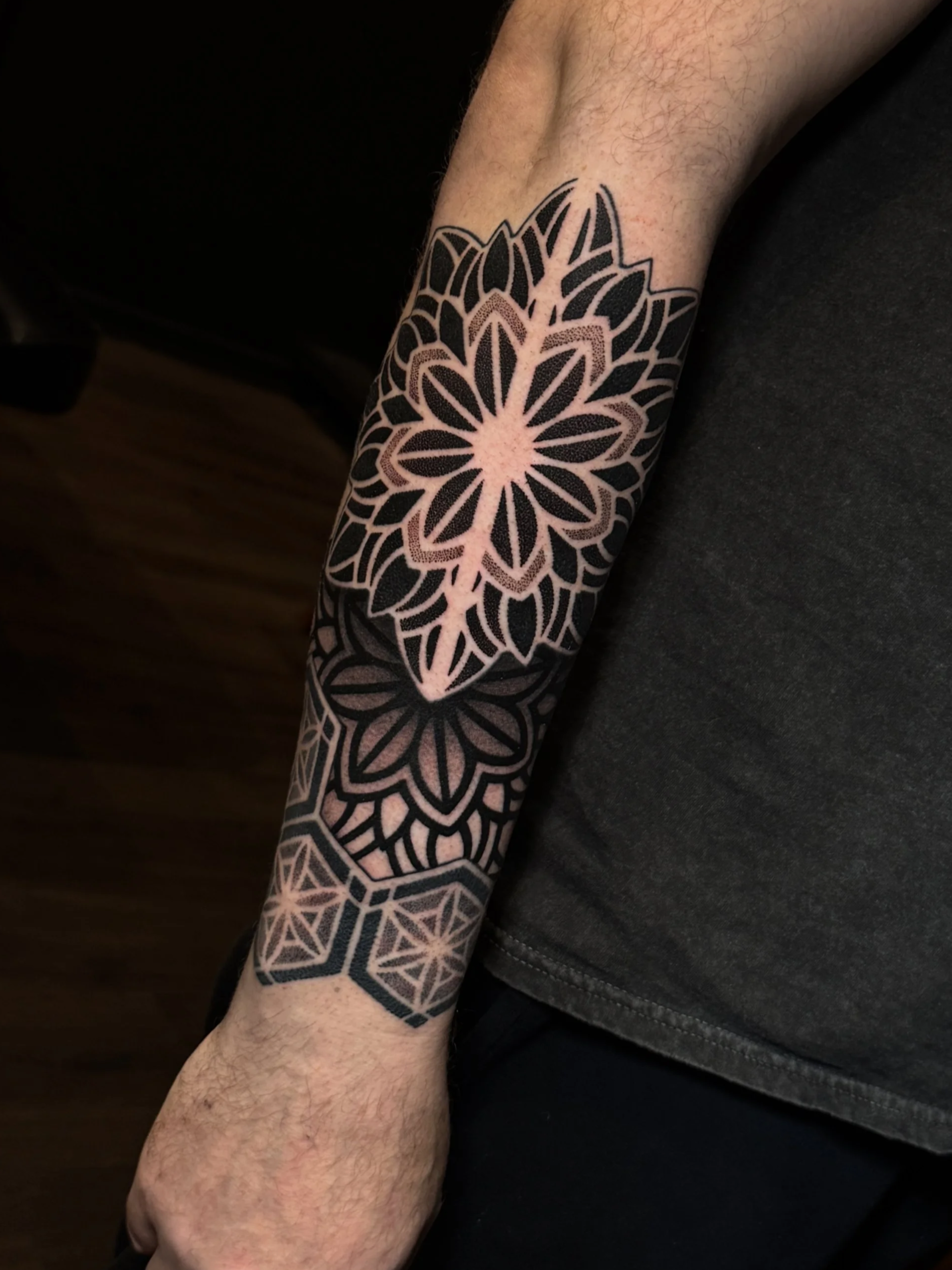
Geometric Tattoo Projects by Jblessink in Toronto
I specialize in geometric, mandala, ornamental, blackwork, and pattern-based tattoos in Toronto, Canada.
The focus is primarily on compositions that work with the natural structure of the body, including arm and leg sleeves, back tattoos, chest projects, and other large-scale placements. Smaller projects such as forearms and hands are also welcomed when the placement provides enough space to develop the design effectively.
Clients can choose from a collection of original available geometric tattoo designs or begin a custom project based on a specific idea, placement, and visual direction.
Whether you are located in Toronto, travelling from another part of Canada, or visiting from the United States, the goal is to create a geometric tattoo that feels balanced, intentional, and naturally connected to your body.
Find the Right Design for Your Placement
Explore Jblessink’s available geometric tattoo designs or submit your idea for a custom project developed around your anatomy, placement, and overall vision.
